Biology & Chemistry · IB · A Level · IGCSE

Scientist by training. Educator and leader by vocation.

I am a biology and chemistry teacher, IB Diploma Biology examiner and former Director of Research, with a PhD in immunology and virology from the National University of Singapore. I spent five years in a laboratory before I taught, and students are expected to ask a clear question and support an answer with evidence.

  • UK Qualified Teacher Status (QTS)
  • IB DP Biology Examiner · IBEN
  • PhD, National University of Singapore
  • Hong Kong ID (Top Talent Pass Scheme)
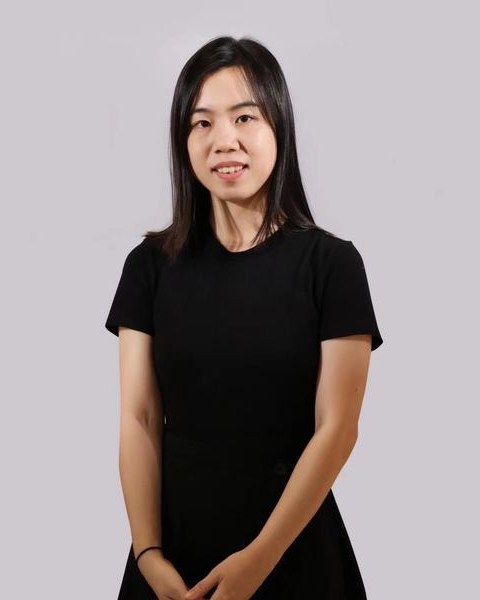
Portrait of Dr Xu Yishi
Dr Xu YishiTeacher of Chemistry, The King’s School Shenzhen International
9
years teaching in international schools
3
department and programme leadership roles
100%
A*–B in A Level Biology, cohort of 12 (Merchiston)
8
peer-reviewed research publications

Teaching philosophy

Every learner, regardless of language, background or starting point, deserves the chance to excel. My job is to build the scaffolds that get them there, and to know when to take them away.

Before teaching, I spent five years in laboratory research, first at Temasek Life Sciences Laboratory and then completing a PhD on Saffold virus at the National University of Singapore. That experience shapes how I teach: science is a way of thinking, not a list of facts.

In the classroom I combine inquiry and practical work with explicit support for language, especially for students learning in English as an additional language. I collect evidence on what works, reflect on it, and adjust. That habit drives my research projects, from STEM clubs to scaffolded writing in chemistry.

As a leader I have led science departments, built a research programme from the ground up and mentored newly qualified teachers. What decides whether any of that lasts is whether colleagues feel supported enough to stay.

Teaching

Teaching and learning

Teaching is what I do. Learning is what the student does. They are not the same thing, so I plan for them separately. Both of my subjects share one difficulty: a scientific explanation moves between levels of description, and experts move between those levels without noticing. Students cannot. For each subject below I set out the learning problem, then how I teach it, then how I check it is working.

Read more
Chemistry

Johnstone’s triangle

Chemistry is taught at three levels: what you can see in the beaker, what the particles are doing, and the symbols we write down (Johnstone, 1982, 1991). Experts move between these levels without thinking about it. Students cannot hold all three at once, so their working memory overloads (Johnstone, 1991; Sirhan, 2007).

Biology

Reasoning across levels of organisation

Biology has the same difficulty. A phenomenon appears at one level, but its causes sit at another: a fever explained by a protein, a population explained by a gene (Schneeweiß & Gropengießer, 2022). Students tend to reason at one level only, so they can name a structure without explaining it.

Leadership

Leading learning, not just lessons

Read more
In practice

Built with the team, not for them

When I took my first department leadership role, I could have written the unit plans and assessment routines myself and handed them over. I built them with the team instead. It took longer and it held, because the people using a system should have a hand in making it. Consistency is also a form of fairness: students deserve the same quality of planning and assessment whichever teacher they have.

Developing colleagues

Teachers stay where they are growing

At CBIS I ran a professional development programme for newly qualified and untrained science teachers, and not one member of the team left that year. At Merchiston I mentored three new teachers through curriculum implementation. I treat retention as a result of how people are supported, not as a target in itself.

Parents as partners

Earning trust for work that has no quick payoff

The hardest part of running a year-long STEM club was not the teaching or the research design. It was bringing parents on board with an activity that had no immediate effect on grades. I learned to explain the purpose of enrichment as carefully as I plan it, and the results eventually made the case on their own.

Knowing every student

Supervision at scale, one student at a time

Fifty students completed independent research projects under the programme I designed at SIFC, and the design question was never how to process them. It was how to make sure each one had a supervisor who knew their project, regular conversations and clear milestones. A 95% completion rate came from that, not from chasing deadlines.

Career

Nine years across six schools

  1. Oct 2025 – Present
    Shenzhen, China
    Teacher of Chemistry
    The King’s School Shenzhen International
    • Teaching Chemistry in the British curriculum (Cambridge IGCSE and A Level) at the first overseas campus of The King’s School, Canterbury
    • Completed a supervised PGCE teaching practicum (University of Sunderland) with two practitioner-research studies
  2. Aug 2022 – Sep 2025
    Shenzhen, China
    Director of Research (EPQ) / Teacher of Chemistry and Biology
    Shenzhen International Foundation College
    • Established and led the Extended Project Qualification programme for 50+ students, with a 95% completion rate
    • Awarded Gold as outstanding supervisor and guide for the British Biology Olympiad and ASDAN competitions
    • All five AP Chemistry candidates scored 4 or above (three 5s, two 4s)
    • Grew enrolment in AP and A Level science by 40% by improving programme appeal and access
    • Built data-driven assessment frameworks and cross-department alignment for science
  3. Aug 2020 – Jul 2022
    Shenzhen, China
    Subject Head of Biology
    Merchiston International School
    • 100% A*–B in A Level Biology across a cohort of 12, and a 70% pass rate in IGCSE Biology and Chemistry
    • Designed CAIE-aligned assessment strategies and new digital learning resources
    • Mentored three new teachers through curriculum implementation
  4. Aug 2019 – Jul 2020
    Foshan, China
    Head of Science, Teacher of Science
    CBIS Bilingual International School
    • Led a team of six science teachers to standardise IB Diploma science delivery
    • Taught the International Middle Years Curriculum (iMYC) in the lower years, a concept-led middle-years programme comparable in approach to the IB MYP
    • Introduced assessment protocols that improved student outcomes by 15%
    • Ran a professional development framework that achieved 100% staff retention
  5. Aug 2018 – Jul 2019
    Shanghai, China
    Teacher of Science
    Shanghai Arete Bilingual School
    • Taught IGCSE Combined Science, Pre-DP Biology and DP Chemistry (Grades 9–11)
    • Coordinated the IB Group 4 Project and supervised Extended Essays
  6. Aug 2017 – Jul 2018
    Foshan, China
    Teacher of Biology
    Desheng School
    • Taught IGCSE Biology, Pre-DP Biology and Junior Middle 3 Biology (Grades 9–10)

Research

A researcher in the classroom

Eight peer-reviewed publications in virology, and a habit of testing my own teaching with evidence.

Read more
Action research · PGCE · 2026

Building, then removing, writing scaffolds in Grade 9 Chemistry

Two plan–act–observe–reflect cycles with a Grade 9 IGCSE Chemistry class of mostly EAL learners. When scaffolds were withdrawn too quickly, the mean score on extended writing fell to 39.6%.

Case study · PGCE · 2026

Re-teaching and bilingual support for EAL learners in IGCSE Biology

A case study of teaching-assistant-led small-group re-teaching and bilingual support for a group of EAL learners in an IGCSE Biology classroom at a British international school in Shenzhen.

Applied professional inquiry · MEd capstone · 2021

Can a STEM club change achievement and motivation?

A year-long mixed-methods study with Grade 8 students, randomly grouped into an experimental group (STEM club plus regular lessons) and a control group. The experimental group’s assessment grades rose by about 20% on average over the year while the control group’s dipped slightly.

Interested in working together, or would like my full CV?

Request CV